
Georgian Color Vocabulary And Its Cultural Associations

Author
Learning color vocabulary is an essential step when you first start studying Georgian.
Colors help you describe the world around you and make your sentences much more precise.
In Georgian culture, many colors carry deep historical meanings and unique linguistic origins.
I’ll show you exactly how to say every major color in standard Georgian.
You’ll also learn how Georgians associate these words with specific cultural traditions.
Table of contents:
Basic Georgian color vocabulary
The Georgian word for color is ფერი (peri).
Here’s a complete list of the most common colors you’ll need to know.
| English | Georgian | Transliteration |
|---|---|---|
| Red | წითელი | tsiteli |
| Dark blue | ლურჯი | lurji |
| Light blue | ცისფერი | tsisperi |
| Green | მწვანე | mtsvane |
| Yellow | ყვითელი | kviteli |
| Black | შავი | shavi |
| White | თეთრი | tetri |
| Brown | ყავისფერი | qavisperi |
| Orange | სტაფილოსფერი | stapilosperi |
| Pink | ვარდისფერი | vardisperi |
| Purple | იისფერი | iisperi |
| Grey | ნაცრისფერი | natsrisperi |
The word for color and the -peri suffix
You probably noticed that many Georgian colors end in the suffix -peri.
This is because Georgians traditionally named colors after objects found in nature.
The word peri translates directly to “color” in English.
When you attach it to a noun, it simply means “the color of” that object.
For example, the word for sky is ცა (tsa).
When you combine it with peri, you get ცისფერი (tsisperi), which means “sky color” or light blue.
The word for carrot is სტაფილო (stapilo).
Adding the suffix gives you სტაფილოსფერი (stapilosperi), which literally means “carrot color” for orange.
Brown is ყავისფერი (qavisperi), which directly translates to “coffee color”.
Pink is ვარდისფერი (vardisperi), meaning “rose color”.
Purple is იისფერი (iisperi), meaning “violet color”.
This logical system makes memorizing Georgian colors incredibly easy for beginners.
Cultural associations of Georgian colors
Colors carry specific cultural weight and history in Georgia.
Black (shavi) is deeply ingrained in everyday Georgian fashion and history.
If you walk through the streets of Tbilisi, you’ll notice most locals wearing black clothing.
Historically, black was reserved for mourning and is still worn by older generations in rural regions for this purpose.
It’s also the prominent color of the traditional men’s garment known as the Chokha.
Red (tsiteli) represents life, blood, and the famous Georgian wine culture.
Georgia is the birthplace of wine, and dark red Saperavi is the most culturally significant variety.
During Orthodox Easter, Georgians always dye boiled eggs a deep red color using madder roots.
White (tetri) is associated with purity, peace, and spiritual clarity.
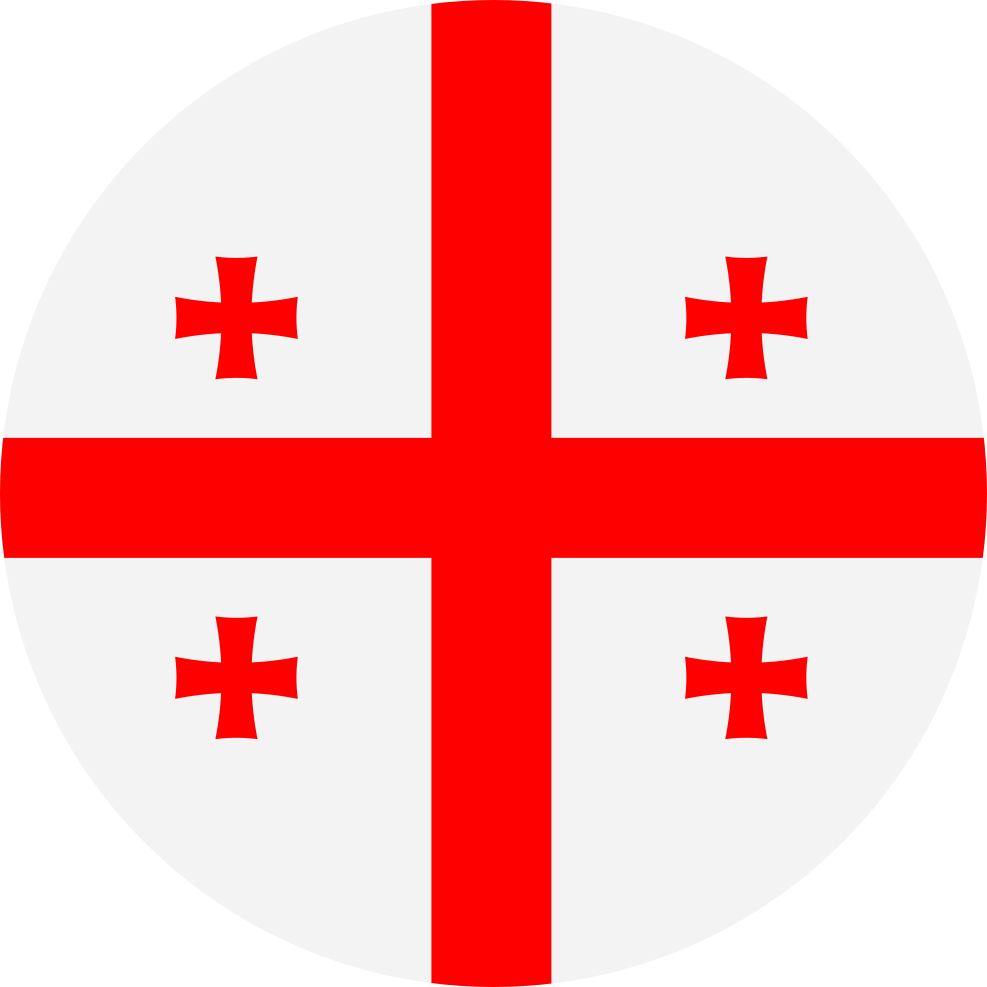
The Georgian national flag features five red crosses set against a bright white background.
Historically, white was also the color worn by Georgian kings and religious figures.
Using colors in everyday sentences
Georgian adjectives, including colors, always come before the noun they describe.
When a noun changes its case in a sentence, the adjective might drop its final letter to match.
Here are a few practical examples of how to use colors in daily conversations.
მე მინდა შავი ყავა.
ეს წითელი ღვინო ძალიან კარგია.
დღეს ცა ლურჯია.
მას თეთრი კაბა აცვია.
Practicing these colors with objects around your house will help you remember them quickly.
Focus on learning the primary colors first before moving on to the descriptive -peri colors.